Sections:
Project Overview
Teacher Notes
Career Connections
Problem Statement
Project Objectives
Student Activities
IL Learning Standards
For more insect-related lesson plans and activities, visit my Adopt-An-Insect lessons page.
Unit developed by Tracy Trimpe & Dawn Hughes, 2007
Project Overview
The Butterfly Brigade unit challenges students to solve a problem involving the diversity of butterfly populations at a local refuge. After learning about biodiversity and methods for scientific investigations, the students work together to develop a method for surveying the butterfly populations at a local refuge that will result in accurate and reliable data. The students use their collected data in math class to create Excel spreadsheets and graphs to help them analyze the data. During science classes, the students compare data sets from previous years to the current set to identify areas of concern with regards to the diversity of butterflies. The students use Internet resources to develop possible strategies that could be implemented to increase diversity in future years. At the end of the project, students create final reports to summarize their findings and strategies. The refuge manager and/or the wildlife biologist visit our classroom to hear their reports.
| Back to Top |
Teacher Notes
This module was developed for use with 8th grade students. The majority of the lessons are designed for the science classroom with the data analysis lesson completed in the math classroom. If a partnership between a math and science teacher is not possible, the module may be completed entirely in a science classroom.
Students will need to have prior experience with identifying common Illinois butterflies. You may choose to limit your survey to a few easy-to-identify species in order to expedite the survey process and reduce possible errors in data collection. An introductory PowerPoint presentation, field guide cards, and flash cards have been provided to help your students learn how to identify the 25 species listed on the Illinois Butterfly Monitoring Network Beginner’s List as well as a few from the intermediate category.
NOTE: It is not required that every student is able to identify every butterfly. Rather they should be able to work together as a group and use the field guide to identify the butterflies they see at the refuge.
| Back to Top |
Primary Career Pathway: Natural Resources Systems
Occupation/Job Titles Related to this Scenario: Wildlife Managers, Ecologists, Park Managers, Environmental Interpreters
Recommended Teaching Subject Areas: Life Science, Ecology
Cluster Knowledge and Skills and Performance Elements addressed:
Monitor natural resource status to obtain planning data
Employ environmental and wildlife knowledge to demonstrate natural resource enhancement techniques
Communicate natural resource information to the general public
Use science concepts, processes, and research techniques to examine natural resource topics
Examine biological and physical characteristics to identify and classify natural resources
Apply statistics, charts, and scatter grams to measure and monitor operations
| Back to Top |
The local board of the US Fish and Wildlife Service wants to increase the biodiversity of the butterfly population within Chautauqua Wildlife Refuge. Your task, as refuge manager, is to recommend a strategy to increase the diversity of the butterfly populations at this site.
| Back to Top |
Develop a procedure to conduct a butterfly survey
Identify data collection methods that will result in accurate and reliable data.
Conduct a field survey to document the diversity of the butterfly populations.
Analyze collected data to determine the diversity status of the butterfly populations and identify areas of concern.
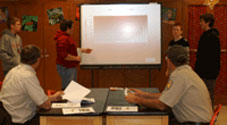
Make a presentation to refuge staff that recommends a strategy that will have a positive effect on butterfly populations.
NOTE: A list of related Illinois Learning Standards for math and science are listed at the bottom of this page.
| Back to Top |
Butterfly Boot Camp - I use these presentations as class warm-ups for a two-week period prior to the scheduled field trip. The presentations introduces students to butterflies commonly found in our area and provides quick quizzes. In addition, flash cards and field ID guides are available. The students use the flash cards during class or study hall to practice their identification and are able to refer to the field guides during the survey field trip.
Presentations: Brushfooted 1, Brushfooted 2, Brushfooted 3, Satyr, Swallowtails, Gossamer Wing, Whites & Sulfurs, and Skippers
Lesson #1: Biodiversity Basics
Students watch the Biodiversity of Illinois video to learn about issues related to biodiversity in our state.
Student Worksheet: Biodiversity of Illinois
ALSO AVAILABLE for educator's outside Illinois ... The Wild Classroom Biodiversity worksheet to use with their biodiversity video.
Lesson #2: Butterfly Problem
Students work together to develop a survey method that will ensure reliable, accurate data.
Student Worksheet: Butterfly Problem
Lesson #3: Name That Butterfly
This lesson provides students with the opportunity to use the butterfly flash cards to practice their identification. If time is available, students may practice their survey techniques by surveying the schoolyard or other local nature area.
Resources: Lesson 3 Overview, Butterfly Flash Cards
Lesson #4: Survey Field Trip
The PDF download below provides an overview of the survey field trip procedures. Related resources are also provided.
Resources: Lesson 4 Overview, Survey Data Page, Butterfly Field Guide
Lesson #5: Data Analysis Part 1
The PDF download provides an overview of the data analysis portion of the project completed in math class.
Resources: Lesson 5 Overview & Data Analysis Part 1 Worksheet
Also available ... Math Lesson Descriptions, Excel Basics Tutorial
Lesson #6: Data Analysis Part 2 & Final Reports
During this lesson in science class, students analyze the data compiled in Lesson #5 and develop three areas of concern. They use Internet resources to research the concerns and develop strategies taht could be implemented to increase butterfly diversity.
Resources: Lesson 6 Overview and Data Analysis Part 2 Worksheet
Also available ... Unit Assessment Guidelines and Materials
| Back to Top |
Websites
Butterflies & Moths of
North American Butterfly Association - http://www.naba.org/
The Science Spot: Insect Links for Kids http://sciencespot.net/Pages/kdzinsect.html
Printed Resources
Field Guide to Butterflies of
Butterflies through Binoculars Available through most bookstores
ISBN-10: 0195106687
Golden Guide: Butterflies & Moths Available through most bookstores
ISBN-10: 1582381364
Curriculum Resources
Biodiversity Basics Available from the Illinois Department of Natural Resources
Curriculum Guide - Available at http://www.dnr.state.il.us/education/ILBiodiversityBasics/toc.htm
The video guide and lessons are included in the Supplemental Information section.
Biodiversity of Illinois Video - Available at http://dnr.state.il.us/education/CLASSRM/videos/videos.htm
Teachers may also request a copy of the Exploring Illinois' Natural Resources DVD, which contains the video and videos from other DNR educational programs.
| Back to Top |
Science Descriptors (Level H)
11A - Students who meet the standard know and apply the concepts, principles, and processes of scientific inquiry.
12B - Students who meet the standard know and apply concepts that describe how living things interact with each other and with their environment.
13A - Students who meet the standard know and apply accepted practices of science.
Math Descriptors (Level H)
10A - Students who meet the standard can organize, describe and make predictions from existing data. (Data Analysis)
10B - Students who meet the standard can formulate questions, design data collection methods, gather and analyze data, and communicate findings. (Data collection)